It is time to allocate those resources where they are truly needed: healthcare, education, and infrastructure. Only then will we build a country that reflects true dignity.
Last week, the Ministry of Finance surprised the public with an announcement that generated as many questions as indignation. A reform to the administrative bonus was approved, and an “economic stimulus bonus” of Q. 4,500 was created, to be delivered annually. According to the Ministry’s Communication Secretariat, these measures were taken “to dignify the work of public servants.” But can human dignity really be bought with a bonus?
This decision adds to other salary increases that have sparked public debate, such as the salary increase for members of Congress, which rose from Q. 29,000 to a range of Q. 45,000–51,939 per month. Meanwhile, President Arévalo maintains that these measures, as well as the expansion of the national budget, seek to guarantee a “dignified life” for Guatemalans and public servants. However, behind these words lie at least three fundamental problems.
- Conceptual confusion about human dignity
Using the concept of dignity to justify economic benefits is not only a mistake, but also a serious conceptual confusion. Human dignity does not depend on a salary or a bonus; it is inherent, inalienable, and cannot be measured in monetary terms. Reducing it to something that can be granted or purchased with money trivializes one of the deepest values of our humanity.
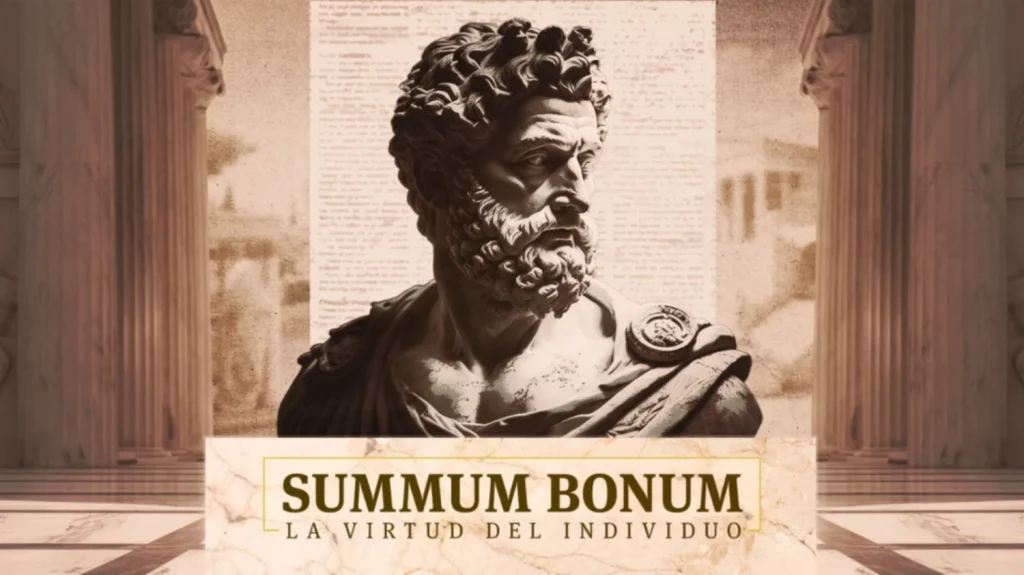
The word “dignity” comes from the Latin dignitas, a term that, according to Cicero, encompassed merit, authority, greatness, honesty, decorum, virtue, and courage. It is not economic income that makes a person dignified, but rather their behavior and principles. These qualities transcend the material.
The modern notion of dignity as an inherent human value emerged during the Renaissance and the Enlightenment. In the 15th century, Giovanni Pico della Mirandola, philosopher of the Duchy of Mirandola, shaped this idea in his work Oration on the Dignity of Man. For Pico, human dignity resides in our ability to reason and exercise free will, a revolutionary conception later developed by Immanuel Kant. According to Kant, while some things have a price and can be replaced, that which transcends all price and admits no equivalent is what possesses dignity.
This evolution of thought consolidated the idea of dignity as an intrinsic value that we possess simply by being human. It is universal because it belongs to everyone, inalienable because it cannot be taken away, and above all unconditional because it does not depend on circumstances or individual merit.
- Instrumentalization of dignity to justify economic and political decisions
The president and his ministers have transformed dignity into a rhetorical tool to justify economic and political decisions. But can dignity be manipulated as an argument in the service of power? Salary policies, however necessary they may be, should be based on criteria such as productivity, merit, and economic valuation.
From my perspective, a person’s dignity lies in their contribution to the country, in their honesty, and in their ability to look others in the eye with pride for their daily effort. No matter how humble the task may be, work carried out with integrity is the true engine that moves a nation.
Confusing dignified work with the profound philosophical concept of human dignity not only distracts attention from real problems, but also distorts the country’s priorities. Instead of resolving the structural shortcomings faced by citizens, dignity is used as a pretext that ends up trivializing its true meaning.
- Deviation from objective criteria for determining salaries
By invoking dignity as an argument, the government distracts attention from the essential criteria for establishing salaries: productivity, merit, and performance. Instead of aligning with labor market dynamics and promoting competitiveness, which are fundamental pillars of a prosperous economy, salary policies seem to respond to a simplistic and emotional narrative.
True competitiveness is not achieved through increases disconnected from economic reality, but by promoting policies that reward individual effort and performance. Only in this way can productivity be encouraged and surpluses generated that directly contribute to a country’s growth and wealth.
It is undignified to speak of dignity through money
Justifying salary increases by appealing to “dignity” not only creates a dangerous precedent, but also distorts economic priorities. This approach opens the door for other sectors to demand benefits under the same argument, ignoring the essential criteria of merit and efficiency. Furthermore, it deepens the disparity between public employees and the rest of Guatemalan workers.
From my perspective, a person’s dignity lies in their contribution to the country, in their honesty, and in their ability to look others in the eye with pride for their daily effort. No matter how humble the task may be, work carried out with integrity is the true engine that moves a nation.
We, the people, have the right to demand dignity in the services that the government owes us. It cannot be that the ports do not function, that the roads are impassable, or that the airport is a source of shame. It is a tragedy that 22% of deaths in Guatemala are linked to maternal illness, prenatal conditions, or malnutrition; that in 2024 an extortion complaint has been filed every 26 minutes; or that the results of the PISA exams show that 87% of Guatemalan children lack the ability to interpret or recognize simple mathematical patterns. Public servants are employees of the nation and should not have better conditions than those they serve. It is time to allocate those resources where they are truly needed: healthcare, education, and infrastructure. Only then will we build a country that reflects true dignity, not in words, but in concrete actions that benefit everyone.