In August 1915, in the midst of the First World War, a German officer dove fully uniformed into a canal in the French city of Douai to save a fourteen-year-old boy, the son of a country his army held under occupation. When Lieutenant Oswald Boelcke wrote to his family about the episode, he didn’t speak of heroism. He said he must have looked ridiculous, dripping like a wet dog, and that he hadn’t even had time to think before jumping in. Weeks later he received a letter from the boy’s family and neighbors, addressed “to the savior of young Albert Delplace.” Savior. That is what an officer of the invading army was called by people who, only hours before, had been his enemies.
That same man would soon write history’s first air-combat manual: eight rules for destroying the enemy, without a single line on chivalry. It wasn’t needed. When a British crew was found dead in a plane still flying uncontrolled, Boelcke ordered the aircraft escorted down, dipped his wings in respect, and none of his pilots claimed that victory. In fighter aviation, a confirmed kill was prestige. They left it on the table. A few weeks later, when Boelcke died in an accident, a British pilot dropped a wreath over the German airfield with a message: “To the memory of Hauptmann Boelcke, our brave and chivalrous adversary. From the Royal Flying Corps.”
Almost three centuries earlier, Pedro Calderón de la Barca immortalized this same idea through Pedro Crespo, the unforgettable protagonist of The Mayor of Zalamea (1651). When King Philip II’s troops burst into his town and the military command demands his absolute submission, Crespo answers with a legendary line: “To the King, one’s wealth and life / must be given; but honor / is the patrimony of the soul, / and the soul belongs to God alone.” The tragedy erupts when Captain De Ataide kidnaps and rapes Crespo’s daughter. What is extraordinary is that Crespo had already proclaimed the dignity of his soul before misfortune struck him. In the midst of his pain he still tries to redress the offense through the path of honor. Only when he receives contempt does he order the captain executed. What matters is that his principle was permanent, before and after the tragedy.
Philip II, too, believed there were limits that could not be negotiated. In 1566, when the Netherlands stood on the brink of religious rebellion, he wrote that before allowing the slightest harm to the Catholic religion, he would lose all his states and a hundred lives, if he had them, “for I do not intend, nor do I wish, to be lord over heretics.” He understood perfectly the price that decision would carry, and he tried to avoid war as long as possible. But a moment came when he decided that the Catholic unity of his dominions was not up for negotiation. History can debate whether he was right. What it cannot debate is that he knew exactly what it would cost him. The king was faithful to his principles.
Opposed to that vision stood Richelieu. The French cardinal held that a ruler does not administer his conscience, but the interest of the State. Francis I of France, the Most Christian King, signed an alliance with Sultan Suleiman the Magnificent, and in 1543 the Ottoman fleet besieged Nice alongside French galleys to weaken the Catholic emperor Charles V. His son Henry II bought land and power with a Protestant war: with seventy thousand crowns a month he pushed the war against the Catholic emperor, and in exchange kept Metz, Toul, and Verdun. And it must be admitted: it worked. France went on to act according to that logic and managed to become the dominant power in Europe. Honor doesn’t pay the bills, and whoever claims otherwise hasn’t read the accounts.
But that same logic produced another, less visible consequence. If the State replaced honor as the arbiter of conflicts, it also had to take over the monopoly on punishment. From then on, it would no longer be private honor that judged offenses; it would be the State. That represented an enormous civilizational advance. No free society can accept every citizen administering justice on his own. For centuries the West replaced honor with law. The problem began when it also tried to replace virtue with regulation. Because law answers who may remain in office. Conscience answers when someone should no longer remain in it.
Aristotle wrote that the virtuous man is not the one who correctly resolves a moral dilemma, but the one whose character had already decided before the dilemma appeared. Cicero held that nothing could truly be useful if it was not also honorable. Machiavelli observed that a republic can survive conflicts, but not the corruption of its customs. Montesquieu ended up closing the argument: virtue is the proper principle of the republic, because no constitution can substitute for the character of its citizens.
That tradition was no stranger to Guatemala either. In June 1944, after thirteen years in power, Jorge Ubico received a memorandum signed by three hundred eleven citizens demanding the restoration of constitutional guarantees. It was not an army or a conspiracy. They were teachers, doctors, lawyers, and merchants who signed with their full names in the middle of a dictatorship. They came after weeks of protests and the death of the schoolteacher María Chinchilla during a peaceful demonstration. On July 1, Ubico submitted his resignation, irrevocably. He understood that the moment to leave had come. His successor, Federico Ponce Vaides, made the opposite decision. Four months later he had to be overthrown by force of arms. The same regime. The same year. Two completely different ways of understanding power.
What has happened since then with that last tribunal of conscience?
Over the past eighty years Guatemala has gone through changes of constitutions, courts, electoral laws, criminal codes, and governments. And yet, how many officials have voluntarily left office because they understood that something had happened under their political responsibility? Very few. In 2015, when citizen protests shook the country, several ministers submitted their resignations, among them Sergio de la Torre. Those decisions accelerated the fall of the government and showed that political responsibility could still exist in Guatemala. Since then we have not again seen officials conclude, on their own initiative, that the office demands accountability even when the law does not yet compel it.
For decades we have tried to solve that vacuum with more legislation. Every crisis produces a new law; every abuse, an additional regulation. Rules are indispensable, but they only reach those who still calculate costs and benefits. No law will ever force a minister to resign when he should. Laws can punish the lack of virtue; they can never replace it.
Virtue has never been entirely individual. It has also been a social expectation. A minister resigned because his conscience demanded it, but also because he wanted to keep looking his wife, his children, his friends, and those who had trusted him in the eye. Republics don’t only need virtuous citizens. They need families, friends, and communities who still expect virtue from them. Because conscience never acts alone: it grows stronger when those we most respect expect from us conduct equal to our principles.
Institutions matter. But no institution produces virtue; it only rewards or punishes certain behaviors. When a society stops demanding character from those who wield power, no constitution can replace that absence. The last tribunal has never been a court. It has always been the conscience upheld by families, friends, and citizens who still distinguished between what is right and what is convenient.
That is why the last tribunal remains in our hands. We citizens decide which conduct we reward and which we stop admiring. We ask a great deal about what a candidate promises and very little about what he has been capable of refusing. We evaluate their government programs, but rarely their character. Societies do not begin to decay when their laws change, but when no one any longer fears failing their own conscience or that of the people close to them. Boelcke had no time to think before jumping into that canal: his character had already decided for him. That tribunal never needed judges, and it still remains in our hands. Societies begin to decay when no one any longer fears failing their own conscience or that of their own.
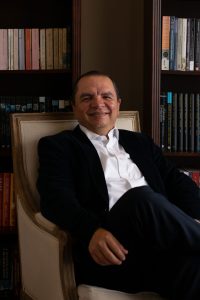
Ramiro Bolaños, PhD. / President of the Centro de Pensamiento y Acción Factoría Libertatis
This column grew out of a conversation with my son José Ramiro, who assembled the gallery of men who kept their word without any law requiring it of them.
References
Aldea Navarro, Quintín, “Felipe II. Política y religión,” in La Monarquía de Felipe II (Madrid: Real Academia de la Historia, 2003), pp. 69–110.
Aristotle, Nicomachean Ethics · Eudemian Ethics, intro. Emilio Lledó Íñigo, trans. and notes by Julio Pallí Bonet, Biblioteca Clásica Gredos, 89 (Madrid: Gredos, 1985), II, 1.
Boelcke, Oswald, An Aviator’s Field Book, trans. Robert Reynold Hirsch (Project Gutenberg, 2009), letters of August 29 and September 18, 1915.
Caamaño, Eduardo, Manfred von Richthofen: el Barón Rojo (Córdoba: Almuzara, 2016), pp. 150–151, 162, 174, 177, and 179.
Calderón de la Barca, Pedro, El alcalde de Zalamea, ed. Ida Farnell (Manchester: University Press; London: Longmans, Green & Co., 1921), vv. 873–876.
Cicero, Marcus Tullius, De Officiis, trans. Ignacio J. García Pinilla (Madrid: Gredos, 2018), III, 11.
Galich, Manuel, Del pánico al ataque (Guatemala: Editorial Universitaria, 1977).
Machiavelli, Niccolò, “Discourses on the First Ten Books of Titus Livy,” in Maquiavelo, trans. Luis Navarro (Madrid: Gredos, 2000), I, 17.
Montesquieu, De l’esprit des lois, new edition, vol. I (London, 1777), III, 3.
Werner, Johannes, Knight of Germany: Oswald Boelcke, German Ace, trans. Claud W. Sykes (Havertown: Casemate, 2009), letter of August 29, 1915.