In Guatemala, despite our difficulties, we enjoy freedoms that in other countries are privileges or even unattainable dreams. What does it mean to be able to express opinions without fear, to undertake business ventures without absolute state control, or to practice any religion without persecution? These freedoms, which we sometimes take for granted, are the result of generations who fought to defend the essence of the republic. Just a few decades ago, these freedoms were unthinkable. Today, we live in a different reality, but we must not forget that these liberties are neither eternal nor invulnerable.
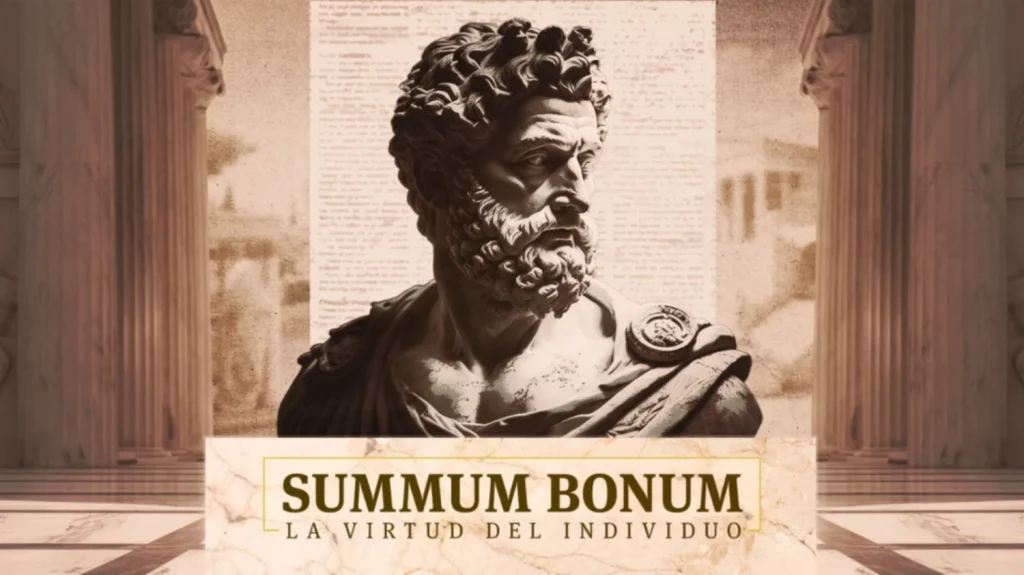
Marcus Tullius Cicero (106–43 BC) was one of the greatest defenders of the Roman Republic. Born into a plebeian family, his talent led him to excel as a lawyer, philosopher, and politician. During his consulship, he dismantled the Catiline conspiracy, an attempted coup that threatened to destroy the republic. Cicero was not only a man of action, but also a profound thinker. In works such as De Re Publica and De Legibus, he articulated a vision of the republic based on virtue, the rule of law, and checks and balances. He argued that power must be limited in order to guarantee the freedom of citizens.
After the assassination of Julius Caesar, Cicero became the principal enemy of Mark Antony, whom he viewed as a threat to the republic. In his Philippics, he denounced Mark Antony’s abuses with an oratory as powerful as it was dangerous. The price of his resistance was his life. In 43 BC, after being included on the proscription list of the Second Triumvirate, Cicero was captured while attempting to flee. He was executed, and as a warning to others, his head and right hand were nailed to the Roman Forum. This brutal act transformed him into an eternal symbol of the struggle for freedom.
When reflecting on Cicero’s life, one unavoidable question emerges: how much are we willing to risk to defend our freedoms?
Leaders such as Isabel Díaz Ayuso in Spain, who defends economic and personal freedom, reflect the importance of maintaining a balance of powers, just as Cicero proposed in his concept of a “mixed constitution” combining monarchy, aristocracy, and democracy to achieve stability.
Also in Spain, Cayetana Álvarez de Toledo has become a powerful voice in defense of freedom of expression and open debate. From Parliament and the media, she has denounced the threats posed by populism and nationalism, which fragment social cohesion. Like Cicero, Cayetana uses her eloquence to oppose authoritarianism, emphasizing the importance of “working together, different yet free and equal,” in defense of the republic.
In Italy, Giorgia Meloni has demonstrated that it is possible to lead a government based on national sovereignty and the defense of individual freedoms. Her administration balances tradition with innovation, promoting policies that prioritize citizen welfare while combating excessive interventionism. Like Cicero, Meloni seeks to preserve the fundamental values of her nation while confronting the challenges of the present.
In Venezuela, María Corina Machado embodies resistance against a regime that has destroyed the economy and trampled civil liberties. From hiding, she continues to lead an opposition movement seeking to restore Venezuelans’ ability to live in freedom. Her struggle recalls Cicero’s sacrifice, confronting tyrannical power with the conviction that liberty is worth any risk.
Freedom demands more than words. It demands action, courage, and the commitment to confront tyranny, wherever it may come from. If we take it for granted, no legacy, martyr, or idea will be able to save it.
Today, strong women such as Cayetana Álvarez de Toledo, Isabel Díaz Ayuso, Giorgia Meloni, and María Corina Machado are leading the defense of liberty and individual rights around the world. But they are not alone. There are also men leaving their mark in defense of the libertarian republic, just as Cicero did in his own time.
In Argentina, Javier Milei is leading a libertarian revolution in a country suffocated by decades of statism and corruption. His government has introduced radical ideas such as eliminating unnecessary ministries and eradicating the fiscal deficit, all in defense of individual liberty, enterprise, and private property. His position challenges entrenched structures, and his message, like Cicero’s, places the citizen at the center of the system, distancing the state from absolute control.
In Canada, Jordan Peterson has emerged as a prominent defender of individual freedoms against authoritarian policies under Justin Trudeau’s government. His opposition to laws imposing the mandatory use of pronouns sparked a global debate about the limits of state intervention. Like Cicero, Peterson argues that freedom resides not only in the absence of physical coercion, but also in autonomy of thought and expression.
The freedom we enjoy in Guatemala is not a gift; it is a legacy built with blood, ideas, and sacrifice. It is the echo of thousands of voices that, like Cicero’s, chose to confront absolute power rather than surrender to silence. But freedom is never guaranteed. There will always be those who seek to take it away, disguising their ambition for authority as promises of security or equality.
Cicero understood this, and that is why he chose risk, resistance, and ultimately martyrdom. His head and hand, nailed to the Roman Forum, were not the end of his struggle, but the beginning of his immortality as a symbol of liberty. Will we, facing the challenges of our own time, be capable of living up to his sacrifice?
Today, the responsibility to defend this freedom falls upon us. We cannot look the other way or wait for others to fight our battles. As Cicero said: “The supreme good of the republic is liberty; whoever dares attack it must be resisted without truce, without rest, without fear.”
Freedom demands more than words. It demands action, courage, and the commitment to confront tyranny, wherever it may come from. If we take it for granted, no legacy, martyr, or idea will be able to save it.
Are we willing to become guardians of this freedom, as Cicero once was? History gives us the answer: freedom is not given; freedom is defended with courage, until the final breath.