It was July 1779, and Matías de Gálvez had been in Guatemala for only thirteen months. In that time, he had accomplished what no previous governor had achieved in six years: laying the first stone of the Cathedral, building the Royal Palace, installing public lighting, putting the Mint into operation, and transforming a maze of ditches and brush into something resembling a capital city. The city council of the time described it this way, without exaggeration: he governed an opulent republic, with institutions, commerce, and order. It was not an abandoned village in the middle of a desert. It was a prosperous Kingdom.
Then the news arrived. A royal decree sealed with the coat of arms of Charles III informed him that Spain had declared war on Great Britain. But the decree did not arrive alone. It came accompanied by rumors, soon confirmed, that the British had already acted: they occupied the Fort of San Fernando de Omoa, controlled stretches of the Mosquito Coast, and threatened the San Juan River. The enemy was not coming. It was already inside.
There is no record of what Matías de Gálvez thought that night. Perhaps he convened a council of the Kingdom. Perhaps he spoke quietly with his wife or with a trusted officer. Perhaps he remained alone in front of a map, calculating what none of his predecessors had ever had to calculate: how to defend and build at the same time, without a regular army, without reinforcements from Spain, using only what he had. What he did next, according to the city council’s records, was fly to the reconquest. That was the exact word they used: flew. Without stopping to consider his age or his ailments. He laid siege to Omoa, recovered the fort on the San Juan River, and destroyed the British fortifications on Roatán. And between battles, he continued building the city. He did not choose between defending and building. He did both.
In 1782, the city council wrote to the king requesting that a statue be erected in his honor bearing the inscription: To the First Father of the Nation. The request was not approved. Guatemala has spent two hundred and forty years without fulfilling that promise to the man who built it while defending it.
But there is something that troubles me more than the forgetting of Gálvez. It is that the Kingdom he governed was not the first time Guatemala had reached the summit. Two thousand years before he laid the first stone of the Cathedral, this same territory had already been the leading exporter of cutting-edge technology in the known world. Not once. Twice.
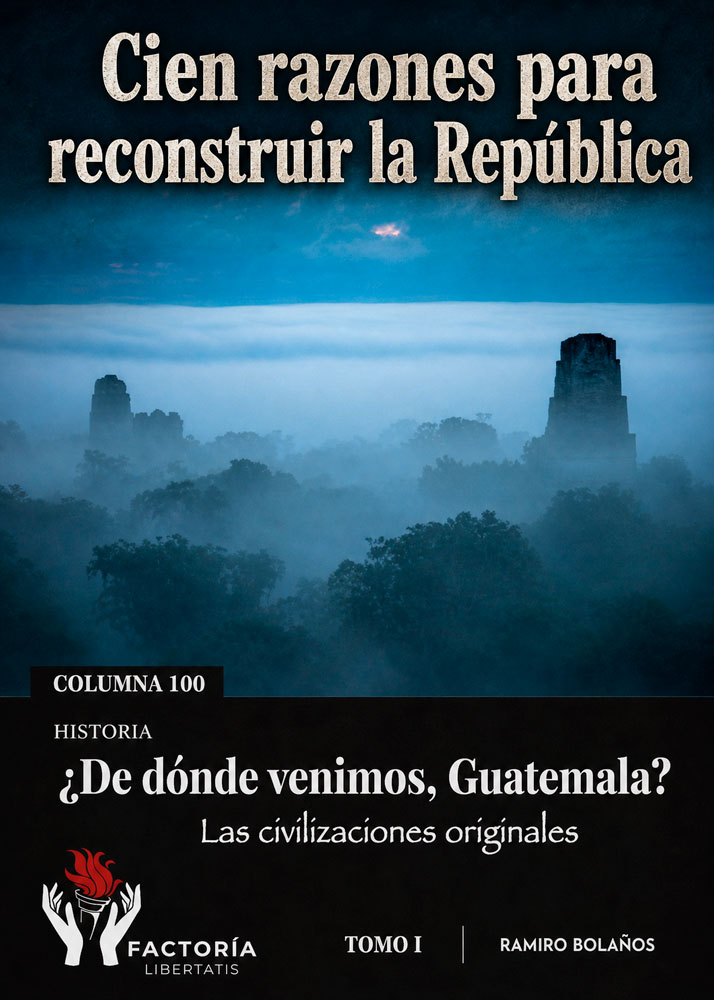
The first was Kaminaljuyú during the Preclassic period. The mines of El Chayal, in what is now Palencia, produced the sharpest material that existed: the equivalent of surgical steel in its era. Geoarchaeologist Geoffrey Braswell documented that in sites as distant as Cobá, in northern Yucatán, 90 percent of the obsidian came from the quarries of El Chayal. Historian Luis Hurtado de Mendoza was even more precise: during the first centuries of the Christian era, Kaminaljuyú was a large-scale obsidian mining center whose exports reached Belize and farther north into Petén. As I document in my book Where Do We Come From, Guatemala? (2022), Kaminaljuyú was the Silicon Valley of the first millennium.
The second was Tikal during the Classic period. By then, Guatemala not only exported technology; it exported the luxury goods of its age: jadeite, quetzal feathers, cacao, and cotton textiles. To move that trade, it had built the Saqbej, roadways up to three hundred kilometers long and twenty meters wide, covered with white lime that illuminated the night and facilitated travel between city-states. The Great Western Trade Route, documented by archaeologist Arthur Demarest of Vanderbilt University, connected the highlands and the mines of El Chayal with the lowlands of Petén and the Caribbean. We were Switzerland and Taiwan at the same time: the financial center and the technological center of our world.
The third was the Kingdom of Guatemala governed by Matías de Gálvez. An opulent city with institutions, with a city council that wrote to the king as an equal, and with a governor who built and defended at the same time.
Three times at the summit.
And today, ranked 27th out of 30 in wealth per person in our own region.
That, too, is who we are.
One hundred columns after beginning this conversation, what weighs most heavily on me is not what we have discovered but what we still refuse to decide. We have documented with hard data that Guatemala has the geographic potential to become the world’s logistical corridor, the cheapest renewable energy producer in the region, a tourism destination capable of multiplying sevenfold, individual talent capable of winning world championships from Melchor de Mencos, and a history of resilience that no trauma has ever completely erased. And yet, we remain ranked 27th out of 30 in wealth per person in our own region. We remain the country that exports laborers instead of products. We continue producing individual heroes within a system that is not worthy of them.
It is not a problem of capability.
It is a problem of decision.
Over these twenty-three months, I have learned that Guatemala has four wounds that feed one another.
The first is economic: we continue growing inward while the world competes outward. Remittances sustain consumption but do not build wealth. Exports have fallen from 27% to 16% of GDP in a decade. Foreign direct investment is fourteen times smaller than remittances. A country that depends on the sacrifice of those who left does not have a development model; it has a migration-based income stream that will eventually come to an end.
The second wound is institutional: for centuries we have been breaking contracts, invalidating licenses, expropriating property, and losing international arbitration cases. The world has taken us at our word. That is why the investment our geography deserves does not arrive. It is not due to a lack of opportunities. It is due to an excess of accumulated distrust, decree after decree, government after government, from the expulsion of the Jesuits in 1767 to the most recent oil contract canceled too late.
The third wound is cultural: we are a country with a painful relationship with time. We feel it passing, but we do not make use of it. Every decision takes too long. Every process seems designed so that nothing changes. A country that does not know how to value its time also does not know how to create prosperity. And while Switzerland built its identity upon the precision of the clock, we continue measuring the future in promises and future administrations.
The fourth wound is political: we continue confusing the question of who governs with the question of how the power of those who govern should be limited. The communism that returns disguised as social justice, the right-wing populism that promises redemption without sacrifice, the caudillo-style leadership that seduces the weary—all are variations of the same error that Polybius diagnosed two thousand years before Marx was born. Without real checks and balances, without protected private property, and without institutions capable of surviving their rulers, any system degenerates. History does not merely suggest it. It guarantees it.
But these are not columns of denunciation. They are columns of proposal. And the proposal is always the same, expressed in different ways across one hundred installments: Guatemala does not need a savior. It needs a Republic.
A Republic that understands that creating wealth is a moral imperative, not a betrayal of the poor. A Republic that finances the student rather than the structures that capture him. A Republic that honors the contracts it signs, because trust is not decreed but built one action at a time. A Republic that respects the time of its citizens as the scarcest resource that exists. A Republic that forms collective heroes, not merely individual champions who shine despite the system.
One hundred columns are not enough to convince anyone who does not wish to be convinced. But they are enough to leave a record. To say that the diagnosis exists, that the evidence exists, that the models work in other countries because they are universal and not because those countries possess something we do not.
Singapore had no natural resources. Ireland was the poorest country in Western Europe. Estonia emerged from the Soviet Union with a devastated economy. Bulgaria took twenty years to transform itself. All of them made a decision: to stop managing what existed and start building what could be. They did not choose between defending their present and building their future. Like Matías de Gálvez, they did both at the same time.
The question for the next fifty columns is simple and has no easy answer:
When will Guatemala decide to stop being the country it could be and start being the country it decides to be?
That answer is not found in a political party, nor in a caudillo, nor in a campaign promise. It lies in a generation that understands that a Republic is not inherited.
It is rebuilt.
Neither caudillo nor party.
Republic.
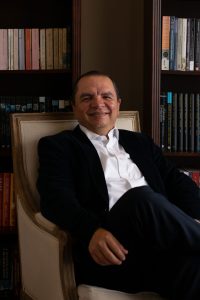
Ramiro Bolaños, PhD.
President of the Center for Thought and Action: Factoría Libertatis
References and Cited Columns
Historical Source
Bolaños, Ramiro. Where Do We Come From, Guatemala? The Original Civilizations. Volume I. (Guatemala: Editorial SET, 2022). Data on the obsidian exports of El Chayal, the Saqbej roadways, and the Great Western Trade Route cited in the opening of this column.
Arévalo, Rafael. Collection of Ancient Documents from the Archive of the City Council of Guatemala City. (Guatemala: Imprenta de Luna, 1857), pp. 171–176.
Axis I — Wealth
Column 59 — What If the Secret of Progress Were Not Spending More, but Saving More to Invest Better? (July 28, 2025)
Column 61 — The Best-Kept Secret: The Efficiency of Foreign Direct Investment in Guatemala (August 11, 2025)
Column 62 — The Hidden Engine of Progress: How Industrial Productivity Defines the Destiny of Nations (August 18, 2025)
Column 72 — The Moral Imperative of Growth: Why Guatemala Does Not Have a Poverty Problem, but a Wealth Problem (October 27, 2025)
Column 73 — Argentina Voted for Freedom: Milei’s Lessons for Guatemala’s Development (November 3, 2025)
Column 82 — More on the Revenge of Common Sense: When Growth Does Not Depend on the State (January 12, 2026)
Column 87 — Dutch Disease: How Remittances (and Our Mistakes) Killed the Export Miracle Since 2013 (February 16, 2026)
Column 88 — The Mirage of Second Place: Size Is Not Prosperity (February 23, 2026)
Column 89 — The Five-Engine Model for a Guatemala of Wealth Per Person (March 2, 2026)
Column 93 — The Arévalo Model vs. the Milei Model: Mortgage Today or Build Tomorrow (March 30, 2026)
Column 95 — Migrant: An Arrow with an Insufficient Future (April 13, 2026)
Column 96 — The Missing Tourism Industry: The Cost of Failing to Attract Investment (April 20, 2026)
Axis II — Republic
Column 52 — The Model Matters: Aznar’s Spain and Ayuso’s Madrid Versus Populism and the Socialist Implosion of Sánchez and Barcelona (June 9, 2025)
Column 53 — One Year of Virtue: Why Freedom Requires Character (June 16, 2025)
Column 56 — And It Stumbled Again Over the Same Stone: The Generation That Ruined Colombia in a Single Election (July 14, 2025)
Column 57 — When Crime Becomes Law: Why Corruption Is Sinking the World (July 14, 2025)
Column 63 — Why Does Nobody Trust Guatemala? The Serial Sin of Undermining Legal Certainty (August 23, 2025)
Column 64 — What If the Secret of Wealth Were Written in Ancient Laws? (September 1, 2025)
Column 66 — Guatemala and Its Word of Honor: Why Trust Is Our Greatest Debt (September 15, 2025)
Column 77 — When Heroes Die: The Urgency of Recovering Guatemala’s Lost Virtue (December 1, 2025)
Column 84 — Fifty-Six Years Later: Our Republic Under Siege Once Again (January 26, 2026)
Column 85 — Republican Rome vs. Guatemala: Why the Romans Built an Empire While We Keep Tendering Roads (February 2, 2026)
Column 98 — Neither Caudillo nor Party: The Republic (May 4, 2026)
Axis III — Decision and Culture
Column 71 — On the 2025 Nobel Prize in Economics: How Culture Defines the Wealth of Nations (October 20, 2025)
Column 75 — Farewell to the World Cup: When Guatemala and the National Team Repeat the Same Destiny (November 17, 2025)
Column 76 — Even the Saints Mourn Lost Time: How the Culture of Slow Progress Holds Back Prosperity (November 24, 2025)
Column 83 — Matías de Gálvez: The Hero Who Saved Guatemala in the Midst of a World War (January 19, 2026)
Column 86 — Duty Before Fear: The Miraculous Feat of the Thirteen-Year-Old Boy Who Saved His Family (February 9, 2026)
Column 90 — To Dare: Guatemala’s Leap of Faith (March 9, 2026)
Column 91 — Chapín: An Identity Built by Many Peoples (March 16, 2026)
Column 92 — The Historical Parallel Between Jasaw Chan K’awiil and Lester Martínez Tut’s World Boxing Conquest (March 23, 2026)
Axis IV — Future
Column 54 — Guatemala Is Already the Best Destination in the World. What Would Happen If We Worked Together to Turn It into the Tourism Center of the Planet? (June 23, 2025)
Column 60 — What If Guatemala Could Be Among the Best? The Plan That Makes Our Dream a Reality (August 4, 2025)
Column 70 — An Infrastructure Menu: Proposals for Guatemala with a Sense of History (October 13, 2025)
Column 74 — From Splendor to Collapse: New York Under a Radical Progressive Mayor (November 10, 2025)
Column 79 — The Digital Economy Does Not Wait: How Guatemalan Entrepreneurs Are Competing for the Future (December 15, 2025)
Column 81 — Predictions 2026: The Revenge of Common Sense in the West (December 29, 2025)
Column 94 — The Guatemala Interoceanic Corridor: The Race to Secure the Geopolitics of Redundancy (April 6, 2026)
Column 97 — What Does a Country Do When It Loses a War in Days? Education. (April 27, 2026)
Column 99 — Neither Spending Nor Abandonment: Let Us Stimulate Demand (May 11, 2026)