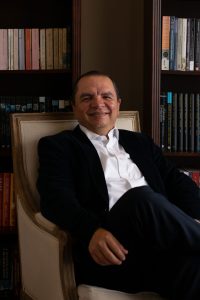
A year ago, I began writing this column with a question that still accompanies me: can a society be free without virtuous citizens? Today, as I celebrate this first anniversary at República, I return to the subject with renewed conviction and gratitude, inspired by a great thinker and friend, Sebastián Landoni, whose essay on virtue and human flourishing offers a lucid framework for understanding the moral role of the individual in the creation of wealth.
Guatemala is going through an early stage of economic integration, still anchored in the first steps of trade, the division of labor, and the basic aggregation of value. In this context, value is not just a market price: it is a human expression, a way of dignifying others by placing our abilities at the service of others. This is how Adam Smith and Carl Menger understood it: value arises when exchange is voluntary, peaceful, and mutually beneficial.
However, the creation of value is not enough to achieve prosperity. The next step is required: accumulating capital. Today, our gross fixed capital formation barely stands at around 16% of GDP, far below the 23% threshold reached by nations that prospered. That is the frontier separating countries that merely survive from those that grow. Reaching it means investing more, producing more, saving more, and trusting more, because without trust, investment does not take risks and capital does not circulate.
And this is where institutions come in. Not the ones on paper, but those that define the moral and legal limits of the system. A market without rules degenerates into abuse; a market without virtue, into decadence. As Hayek pointed out, spontaneous order only works when participants accept a framework of responsibility and limits. That framework is not imposed from above: it is cultivated from within. It is a moral order, not simply a legal one.
Sebastián Landoni says it plainly: economic growth and human flourishing cannot be sustained without virtue. Economics is a human science before it is a mathematical one. Every economic decision embodies a moral judgment. That is why authors such as McCloskey, Otteson, Horwitz, and Shils have insisted that market freedom requires an invisible fabric of trust, character, and responsibility. Law and incentives are not enough: virtue is necessary.
And what are these virtues? Some are already familiar to us: honesty, industriousness, generosity, perseverance, responsibility. Others require more attention: gratitude, temperance, hope, prudence, fortitude. But there are two I want to highlight because of their practical relevance in the Guatemalan context: efficiency and punctuality. Efficiency, because managing scarce resources well is a moral obligation; punctuality, because respecting another person’s time is an act of civility and inner order.
In a country like Guatemala, where everything is yet to be done, the true revolution will not be televised nor decreed from a pulpit or an assembly. It will happen in silence, in the conscience of every citizen who decides to live with virtue.
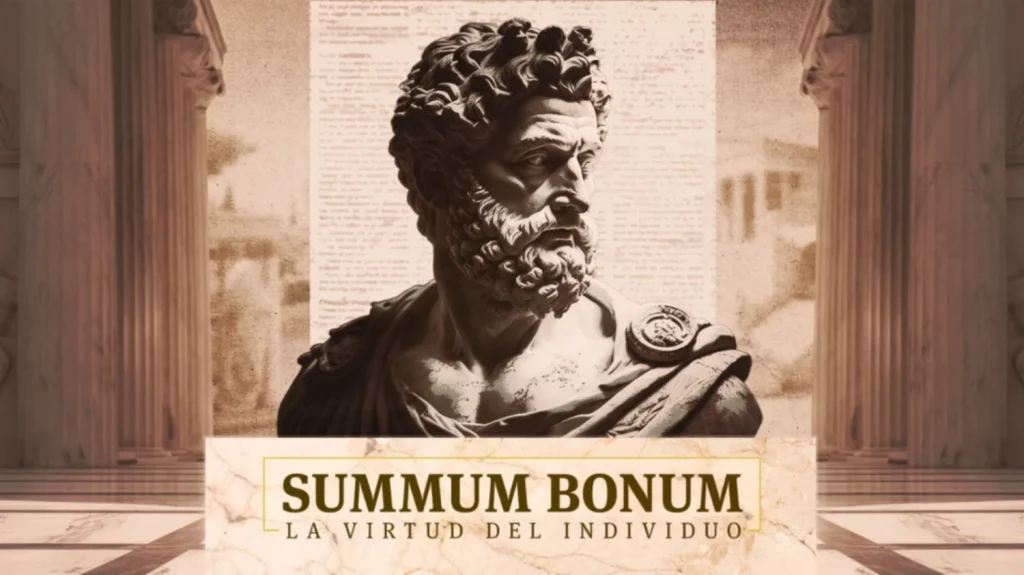
But virtue cannot be only an individual choice of the present. It is also a legacy that we are obligated to transmit. Those of us who believe in freedom have the duty to teach new generations the classical model of virtue: the one that comes from Aristotle, Marcus Aurelius, Augustine of Hippo, Thomas Aquinas, and Saint John Paul II. That model, forged in the Judeo-Christian tradition, was the foundation of the Western civilization that brought humanity to the highest levels of development, dignity, and wealth ever achieved.
To abandon that legacy — out of fashion, ignorance, or cowardice — is to betray not only those who came before us, but also those who have not yet been born. And the price will be high: the moral vacuum is quickly filled by authoritarianism, imposed egalitarianism, institutional chaos, and new forms of absolutism disguised as social justice. Without virtue, freedom does not survive. And without freedom, what remains is not progress, but servitude.
I have left out of the list one virtue that Sebastián Landoni mentions: obedience. In a free republic, we do not seek obedient subjects, but responsible citizens. The virtue we need is not submission, but commitment. It is not blind obedience, but fidelity to higher principles: freedom, truth, justice.
Freedom is not imposed: it is earned when we build it from the will of each individual. It is an intimate and collective work at the same time. It is not born from decrees or ideologies, but from the daily character with which we face every moral decision: paying on time, keeping one’s word, telling the truth, taking care of what belongs to everyone, resisting the temptation of what is easy.
In a country like Guatemala, where everything is yet to be done, the true revolution will not be televised nor decreed from a pulpit or an assembly. It will happen in silence, in the conscience of every citizen who decides to live with virtue.
And when that happens — when many of us choose good even when no one is watching — then freedom will no longer be a promise or a speech: it will be destiny.