I invite you, dear reader, to take on this mission together. It depends on us.
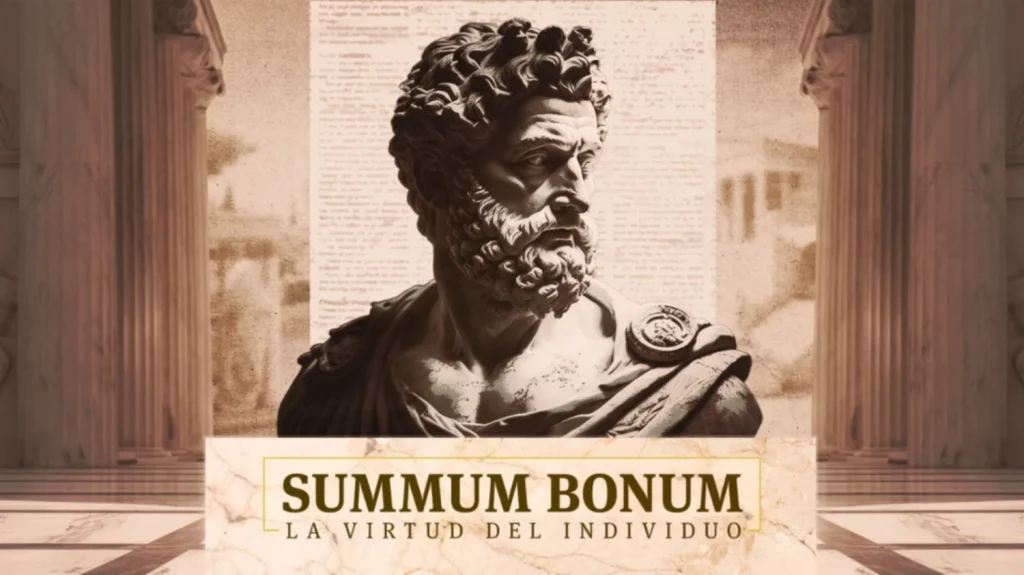
The antidote against absolutism, authoritarianism, and collectivism is the virtue of the individual, the sustainer of the principles of freedom within a framework of checks and balances inside a republic.
In the mid-18th century, Charles Louis de Montesquieu argued that governments are defined by their guiding principle: despotism is sustained by fear, monarchy by honor, and the republic by virtue. For Montesquieu, a successful republic balances the interests of the nobility, the aristocracy, and the people, preventing the concentration of power in a single group. But it is the virtue of the individual that allows the preservation of stability and harmony among the interests of diverse groups.
Since the times of the Roman Republic, Marcus Tullius Cicero viewed public life as the stage where individuals should practice active virtue, serving others and respecting individual interests. For him, the republic was not merely a space of power, but a moral commitment where sacrifice for the nation was the highest expression of virtue.
Niccolò Machiavelli, in the 16th century, revived these ideas with a more pragmatic approach. For him, virtue consisted in the ability of leaders to balance the interests of different groups and create laws that foster freedom and stability. He proposed a mixed republic combining monarchy, aristocracy, and democracy, recognizing that pure forms of government tend to corrupt themselves: monarchy degrades into tyranny, aristocracy into oligarchy, and democracy into anarchy.
A century later, John Locke emphasized that freedom can only exist within a legal framework that guarantees the harmonization of interests. For Locke, the virtue of the individual is intrinsically linked to freedom through just laws that protect life and property. The rule of law, according to him, implies that individuals may freely exercise their will while respecting others.
John Adams consolidated this idea by affirming that a republic must be “a government of laws, and not of men.” Virtue and respect for the law, according to Adams, are the pillars of a just and equitable republic. Benjamin Franklin also stated that “only a virtuous people are capable of freedom.” For Franklin, a virtuous people do not require a large State to enforce obligations, because each citizen assumes responsibility for fulfilling their duty.
It is not only about observing the law, but about living with purpose, about embracing our duties as citizens. At the end of our lives, we should not measure ourselves by what we obtained, but by what we gave. By how, through virtue, we contributed to the good of our society, leaving a better country for those who come after us.
At the end of the 18th century, Immanuel Kant elevated the discussion to the ethical realm, affirming that virtue is not only a civic duty, but also a moral imperative. For Kant, acting virtuously means respecting the dignity and autonomy of others. Virtue, according to him, is the foundation of a society where freedom is harmonized with mutual respect.
In the 20th century, Søren Kierkegaard and José Ortega y Gasset warned about the dangers of the masses. When the individual dissolves into the collective, they lose their freedom and become a manipulable tool in the hands of leaders. The individual’s renunciation of responsibility facilitates the concentration of power in the hands of manipulators of the masses. The virtue of the individual is the final bulwark against authoritarianism.
In the 21st century, Jordan Peterson has revived the focus on individual responsibility as the key to confronting the chaos of modern life. According to Peterson, the virtue of the individual lies in their capacity to assume responsibility for their own life, putting their own house in order before attempting to change the world.
Throughout history, philosophers have seen virtue as the essence of the system of life that allows the individual to exercise freedom, progress, and achieve happiness. This implies focusing not on rights, but on duties: the commitments we have toward others, our families, our friends, our neighbors, and our fellow citizens. Only by exercising our freedom with respect and fulfilling our duties can we build a better Guatemala.
The republican system has been, from classical Rome to modern republics, the bulwark that harmonizes and balances the interests of the ruling elite, the aristocracy, and the people. This structure can only be sustained by citizens committed to virtue and respect for the law. Our republic, founded in 1847 by Rafael Carrera, provides us with a system that today more than ever we must preserve.
It is not only about observing the law, but about living with purpose, about embracing our duties as citizens. At the end of our lives, we should not measure ourselves by what we obtained, but by what we gave. By how, through virtue, we contributed to the good of our society, leaving a better country for those who come after us.
Thus, with our heads held high, we will be able to say when leaving this world: “Life, I have fulfilled my part. I left my country better, freer, more prosperous, a better place for my children and my fellow citizens to flourish.” I invite you, dear reader, to take on this mission together. It depends on us.