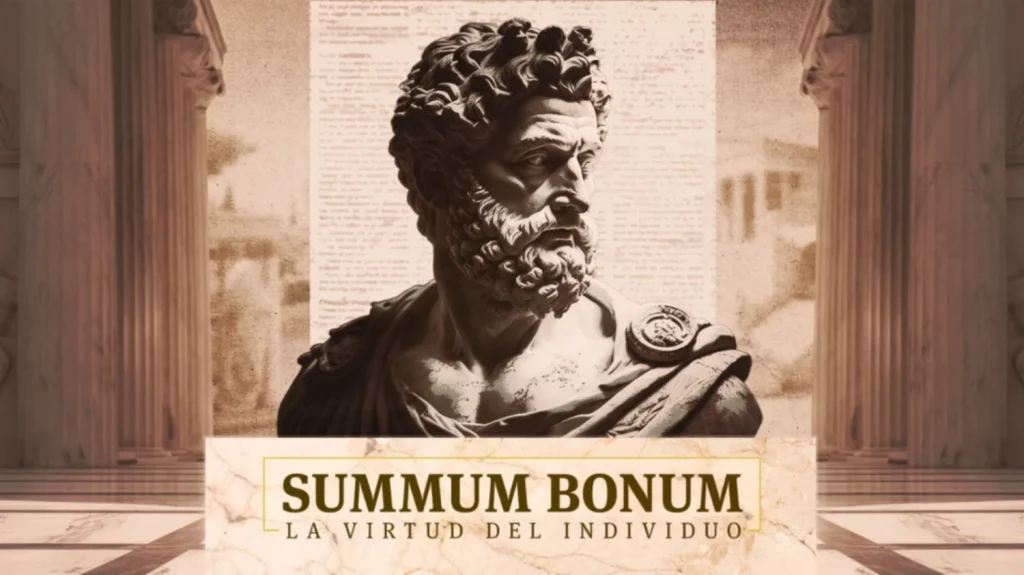
“No es porque las cosas sean difíciles que no nos atrevemos; es porque no nos atrevemos que son difíciles.” – Seneca, Moral Epistles.
In The Sickness Unto Death (1849), Søren Kierkegaard argues that heroism is daring: throwing oneself into the unknown knowing that we may lose everything, but understanding that this is the only authentic way to exist.
He challenges us to dare to be ourselves and to fulfill our potential. In the original Danish, vove is the voluntary action of one who throws himself into the void of freedom because he knows that remaining on the shore is also a form of slow death. That leap of faith — and the physical and mental effort it demands — is the responsibility of whoever faces a challenge.
My proposal is simple: that Guatemalans make the decision today to change our country model in order to transform the destiny of our people.
Kierkegaard is recognized as the father of existentialism, a doctrine that places knowledge of reality in the immediate experience of one’s own existence. The philosopher of language Ludwig Wittgenstein considered him the deepest thinker of the nineteenth century and even described him as a saint, a quality he probably did possess.
He was not only a Danish theologian: he was also a philosopher and social critic. He died at 42, but left behind an indelible body of work that insists on the responsibility of the individual to choose freely. To dare, to leap, not to remain paralyzed on the shore: to take the leap of faith.
History offers numerous examples of that leap. Julius Caesar took one when, upon crossing the Rubicon, he uttered the words that sealed his destiny: Iacta alea est.
“Let us march,” he said, “for the gods show it and the wickedness of our enemies demands it. The die is cast.”
Crossing the Rubicon meant crossing the border between his province, Cisalpine Gaul, and Roman Italy. Doing so at the head of his troops meant breaking the law and unleashing civil war. According to tradition, Caesar hesitated for a moment. A vision — a divine musician sounding the war trumpet — called him to battle. Furthermore, Pompey and the Senate had already declared him an enemy of the State three days earlier.
Thus, between the challenge of his adversaries and what he interpreted as the will of the gods, he decided to cross the river. The rest is history.
Countries also face, at certain moments, that same call. Will Guatemalans be prepared when it reaches us? Or perhaps it is already calling us and we still have not realized it.
Another contemporary of Kierkegaard, though of a very different temperament, was the German philosopher Friedrich Nietzsche. He was not called a saint, but accursed. He proclaimed the “death of God,” not as a literal event, but as the recognition that man had occupied the place once attributed to the divine.
In 1889, in Turin, he suffered a collapse after seeing a coachman whipping a horse. He threw himself around the animal’s neck to protect it and never regained his sanity. He spent his last eleven years in silence.
But before that he had written in The Gay Science (1882): “The secret for harvesting the greatest fertility and the greatest enjoyment of existence is summed up in this: live dangerously! Build your cities beside Vesuvius. Send your ships into uncharted seas.”
Nietzsche was “accursed” not because of evil, but because of his intellectual audacity. He was the one who dared to look into the abyss while others preferred the comfort of inherited truths.
It almost seems as if Nietzsche were whispering into Hernán Cortés’s ear. The conqueror of New Spain certainly lived dangerously.
In July 1520, after weeks of hunger and six days of continuous combat, he faced at the Battle of Otumba an army of tens of thousands of Mexica warriors with barely 440 Spaniards, 23 horses, 12 crossbowmen, and some three thousand Tlaxcalan allies. That handful of survivors from the Noche Triste stood on the brink of annihilation.
Bernal Díaz del Castillo recounts that, while they attempted to retreat along the Tacuba causeway, the Mexica hurled the heads of captured Spaniards at them and shouted: “Thus we will kill you, and these are their heads; therefore know them well.” At the same time, the drums of the great temple of Huitzilopochtli resounded, where the hearts of prisoners were offered in sacrifice.
Those men knew there was no possible retreat.
When Hernán Cortés arrived in Yucatán in 1519, legend says he burned his ships. In reality, he scuttled them.
In his second letter to Emperor Charles V, he explains that, in order to prevent supporters of the governor of Cuba, Diego Velázquez, from fleeing back, he decided to bore holes in the vessels until they became useless. The objective was simple: eliminate any possibility of retreat.
“Burning the ships” remained as a historical metaphor for the point of no return. But Cortés’s decision combined audacity with cunning. With thirteen ships later rebuilt in Veracruz, he was able to besiege Tenochtitlán for nearly three months and defeat the Mexica Empire.
The lesson for Guatemala is clear: great transformations begin when the door to retreat is closed. Preparing today — with more savings and less debt — is our way of sinking the ships before the storms announced by a turbulent world arrive.
Aristotle taught that cowardice is the defect of courage, while recklessness is its excess. Reckless would be to continue indebting ourselves without having a security plan, without preparing for when the global environment turns adverse.
Courageous, on the other hand, would be to change models: use remittances to encourage savings and investment, raise our productivity, and compete in the world by exporting more before it is too late.
History teaches that daring is not an act of madness, but of precision.
On the plains of Otumba, when the 440 survivors of the Noche Triste found themselves surrounded by thousands of enemies, the destiny of what would later become our civilization hung by a thread. It was there that an individual act changed the course of history.
While Cortés identified the decisive point, a soldier — Juan de Salamanca — hurled himself into the heart of battle and brought down the standard of Cihuacóatl, the supreme commander of the Mexica army. The Mexica armies fought in organized units centered around standards that marked the positions of commanders and maintained combat cohesion. When the principal standard fell, command could quickly disintegrate.
At that instant the Mexica army hesitated. And the battle changed direction.
That was how a handful of men managed to break the will of a vastly superior army.
Today, Guatemala finds itself in its own “Otumba.”
We are surrounded by stagnation, distrust, and fear of change. Frequently we wait for “the system” or “the government” to take the first step, forgetting that — as the Prussian philosopher Immanuel Kant would say — daring is the escape from our own self-imposed immaturity.
Daring requires intelligence. It is not about burning our past with resentment, but about sinking what no longer floats in order to salvage the nails, sails, and wood with which we will build the future. As Kierkegaard warned, not daring is to lose oneself. Guatemala cannot afford that luxury. The true risk is not taking the leap toward a culture of success and development, but remaining motionless while the world continues moving forward.
It is time to identify our own “standards of defeat” and, like Salamanca, dare to bring them down.
Because history is not written by those who remain on the shore guarding useless ships, but by those who — after having closed every path of retreat — understand that the only possible direction is forward. The die is cast. The time has come for Guatemala to walk decisively toward its destiny of greatness.
Ramiro Bolaños, PhD. / President of the Center for Thought and Action
“I mean to say, Sancho, that the desire to attain fame is exceedingly active. Who do you think hurled Horatius from the bridge, fully armed, into the depths of the Tiber? Who burned the arm and hand of Mucius? Who impelled Curtius to throw himself into the deep fiery chasm that appeared in the middle of Rome? Who, against all the omens shown against him, made Caesar cross the Rubicon?
And, with more modern examples, who scuttled the ships and left stranded and isolated the valiant Spaniards led by the most courteous Cortés in the New World? All these and other great and varied deeds are, were, and shall be works of fame, which mortals desire as the reward and offspring of the immortality that their famous deeds deserve; although we Christians, Catholics, and knight-errants ought to attend more to the glory of the ages to come, which is eternal in the ethereal and heavenly regions, than to the vanity of fame achieved in this present and fleeting age; which fame, however long it lasts, must in the end perish together with the world itself, which has its appointed end.”
– Miguel de Cervantes, The Ingenious Gentleman Don Quixote of La Mancha. Volume II.
References
Seneca, Lucius Annaeus, Moral Epistles to Lucilius, trans. by Ismael Roca Meliá (Madrid: Gredos, 1986), letter 104, Sec. 26, p. 115.
Kierkegaard, Søren, The Sickness Unto Death. (Madrid: Editorial Trotta, S.A., 2008), p. 25.
Kierkegaard, Søren, [pseud. Anti-Climacus], Sygdommen til Døden, in Søren Kierkegaards Skrifter, vol. XI (2006), p. 121.
Drury, Maurice O’Connor, The Danger of Words and Writings on Wittgenstein, ed. by David Berman, Michael Fitzgerald, and John Hayes (Bristol: Thoemmes Press, 1996), p. 88.
C. Suetonius Tranquillus, Divus Julius, edited by Maximilian Ihm. (Leipzig: Teubner Verlag, 1908), book I, chapter 32.1 [Online] https://www.perseus.tufts.edu/hopper/ [Accessed June 6, 2026]
Chamberlain, Lesley, Nietzsche in Turin, trans. by Pablo Sauczuk (Barcelona: Gedisa, 1998), p. 201.
Nietzsche, Friedrich, The Gay Science, trans. by José Jara (Madrid: EDAF, 2002), Book IV, aph. 283, p. 208.
Cortés, Hernán, “Second Letter-Report from Hernán Cortés to the Emperor: dated in Segura de la Sierra on October 30, 1520” in Letters and Reports of Hernán Cortés to Emperor Charles V. (Paris: Central Railway Press, 1866), p. 54.
Bernal Díaz del Castillo, The True History of the Conquest of New Spain – Variants Apparatus, edition by Guillermo Serés. (Madrid: Royal Spanish Academy, 2011), chapter CLII, p. 587; chapter CXXVIII, p. 440.
Pedro Salmerón Sanginés, The Battle for Tenochtitlán. (Mexico City: Fondo de Cultura Económica, 2021), p. 126.
David F. Marley, Wars of the Americas: A Chronology of Armed Conflict in the Western Hemisphere, 1492 to the Present. (Santa Barbara, Denver & Oxford: ABC-Clio, 2008), p. 30.
Aristotle, Nicomachean Ethics. (Madrid: Editorial Gredos, 1985), Book II, p. 175; Book III, p. 195.
Sánchez de Toca Catalá, José María, “Doctrine and Armament: The Battle of Otumba,” Revista Ejército, no. 948 (April 2020), p. 68.
Immanuel Kant, What is Enlightenment?, trans. by Agapito Maestre and Román García (Madrid: Alianza, 2004), p. 83.
Miguel de Cervantes Saavedra, The Ingenious Gentleman Don Quixote of La Mancha – Commemoration of the IV Centenary of the Second Part of Don Quixote by Enrique Suárez Figaredo. (Madrid: Lemir 19, 2015), chapter VIII, pp. 520-521.