This January 2 marked the 250th anniversary of the founding of Guatemala City. But its history has been marked by destruction. On July 29, 1773, as on so many occasions, the inhabitants of the Kingdom of Guatemala awoke startled by the violence of the earth’s movement. At dawn, the first rays of sunlight revealed the collapsed facades of houses, churches, and palaces.
As early as 1527, while debating the location of the city in the Valley of Almolonga, the council warned about the danger of the volcanoes and the “fire they throw.” It was not then an earthquake, but the “frightful tempest of water and earth” that descended from the volcano on September 10, 1541, just one night after Doña Beatriz de la Cueva had been named governor. The avalanche from the Agua volcano dragged rocks “like ten oxen” and mud that covered the city to the height of a lance. Buried died La Sinventura, widow of the conquistador who had founded the first capital in Iximché in 1524. Belonging to the House of Albuquerque, one of the most powerful families of the Spanish nobility, did not save her.
Forty-two days later, the council decided to move the city of Santiago de los Caballeros to the Valley of Panchoy, on October 22, 1541. However, the urban layout did not begin until 1543. It was not until 1566 that the city received the titles of “Most Noble and Most Loyal” from Philip II, sovereign of the kingdoms of Castile and León, Aragon, Portugal, and the other peninsular kingdoms; Duke of Burgundy and Milan, King of the Indies and of the islands and mainland of the Ocean Sea.
Since the Maya Preclassic period, the region has suffered major seismic events. After the 1541 avalanche, Santiago de los Caballeros endured new destructive earthquakes in 1585, the San José earthquakes in 1651, Santa Rosa in 1689, San Miguel in 1717, and finally, in 1773, the Santa Marta earthquakes, which reduced the city to ashes and rubble and forced its relocation to a new valley.
The city became divided between “terronistas” and “trasladistas.” Captain General Martín de Mayorga considered the Valley of Panchoy uninhabitable. The final decision came from the Crown: Charles III ordered the relocation through the Royal Decree of December 1, 1775, to the Valley of the Ermita—or Valley of the Virgin of the Assumption—as the definitive site for the new settlement, under the name Nueva Guatemala de la Asunción.
Between 1773 and 1779, the new city remained submerged in dreadful inaction. The homes were temporary huts of straw and wattle, without protection against the elements. Although the urban layout had been marked, the terrain remained a labyrinth of ditches and brush that prevented the transit of carriages. Not a single relevant stone had been placed in the Royal Palace or the Cathedral. The city had been born without a soul. The discouragement was such that many residents secretly returned to the ruins or emigrated to other provinces. There were not enough resources or masons, and the new valley was not prepared to receive thousands of people without markets or basic supplies. A prolonged paralysis that threatened the very survival of the kingdom.
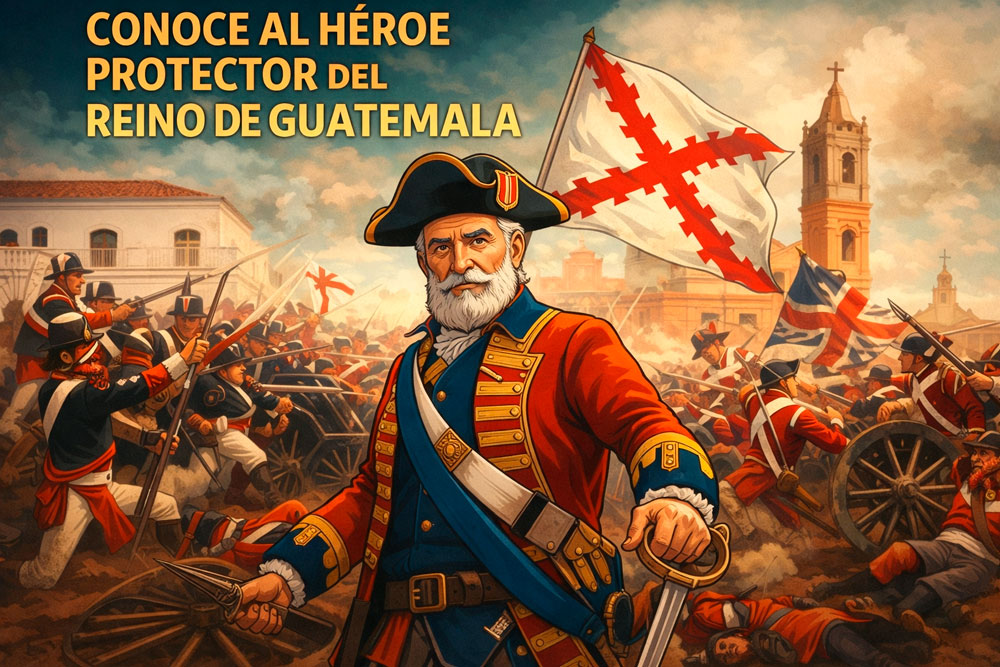
In 1778, the Kingdom of Guatemala finally received a man of action: Marshal Matías de Gálvez. Upon his arrival, on June 18, 1779, he assumed office as governor, captain general of the Kingdom, and president of the Royal Audiencia. From the beginning he promoted public works, managed funds from New Spain, and agreed with the residents on local taxes to build the new city. His greatest merit was securing and honestly and efficiently administering the resources necessary so that construction would not stop while he resolved the city’s bankruptcy.
Under his command, public buildings began rising above ground level. He established a basic police and public lighting system, giving the “Ermita” the appearance of a modern and safe capital. He improved the aqueducts and secured the supply of potable water. He laid the first stone of the Cathedral in the Plaza Mayor and put the Royal Mint into operation. He accelerated the construction of the Royal Palace and the Audiencia, built the Royal Customs House, expedited the distribution of land, and promoted the beginning of the convents. In barely two years he achieved what had not been accomplished in the previous six.
Shortly after his arrival, in June 1779, France and Spain declared war on the Kingdom of Great Britain in support of the independence of the North American colonies. From their base on the Mosquito Coast, the British attempted to divide the Indies of the Spanish Empire in two. In October of that same year they captured the fortress of San Fernando de Omoa. Without waiting for reinforcements from Spain or the viceroyalty, Matías de Gálvez organized a force of Guatemalan militiamen. In a lightning operation, he besieged the fortress and achieved the surrender of the British on November 28, 1779.
The following year, the British attempted to take the fortress of La Inmaculada Concepción on the San Juan River. Gálvez organized the siege. The climate, disease, and prolonged blockade decimated the invading forces, among whom was a young Horatio Nelson, the future admiral of Trafalgar. The fortress was recovered in January 1781.
In May of that same year, Bernardo de Gálvez, Matías’s son, besieged Pensacola, the principal British stronghold in the Gulf of Mexico. Faced with hesitation about entering the bay, he pronounced his famous “Yo solo” (“I alone”) and advanced with his ship, forcing the rest of the fleet to follow him. The British surrendered on May 8. With this victory, the possibility that the British might surround George Washington’s troops was eliminated.
On October 19, General Lord Cornwallis surrendered at Yorktown to the combined forces of Washington’s Continental Army and Rochambeau’s French troops. The Spanish victory at Pensacola had made that decisive maneuver possible. The pincer strategy between Bernardo and Matías was coordinated by their brother José de Gálvez, Minister of the Indies.
In March 1782, Matías de Gálvez personally led an expedition toward the Bay Islands and attacked Roatán. After an intense bombardment and a successful landing, he achieved the surrender of the British garrison and destroyed its fortifications. With this, the marshal secured the definitive expulsion of the British from the territory of the Kingdom of Guatemala.
The war concluded with the Treaty of Paris on September 3, 1783. It recognized the independence of the thirteen colonies, returned the Floridas to Spain, and sealed the British withdrawal from Central America, with the sole exception of the logging enclave in Belize.
In light of these administrative, construction, and military feats, the council of Guatemala sent a letter to the king praising Matías de Gálvez for having managed to build a city in the middle of a world war. As recognition, the monarch granted him the viceroyalty of New Spain in 1783. He is remembered for his integrity and courage and for having been the hero who made possible the Guatemala we inhabit today.
In his time, the council requested from the king that he be granted the title of “First Father of the Nation” and that a statue be erected in his honor. It was not authorized. Perhaps for that reason, during the commemoration of the city’s 250th anniversary, it is fair to settle a historical debt: to remember his name, raise a statue in his memory, and return to Guatemala one of the heroes who made possible what we are today.
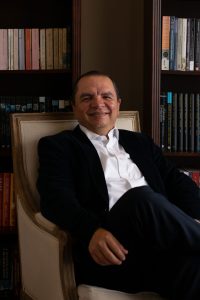
Ramiro Bolaños, PhD. / President of the Center for Thought and Action: Factoría Libertatis
References
Amigos de los 25 de julio, ‘On the Tricentennial of a Forgotten Hero from Málaga: Matías de Gálvez, from Artilleryman to Viceroy’, Amigos de los 25 de julio https://amigos25julio.com/en-el-tricentenario-de-un-heroe-malagueno-olvidado-matias-de-galvez-de-artillero-a-virrey/ [accessed January 18, 2026].
Anonymous, Old Book of the Foundation of Guatemala and Papers Related to Don Pedro de Alvarado, ed. by J. Antonio Villacorta C. (Guatemala: National Printing Office, 1934).
General Archive of the Indies, Royal Decree for the Relocation of the City of Guatemala to the Valley of the Ermita (Seville: 1775).
Arévalo, Rafael, Collection of Ancient Documents from the Archive of the Guatemala City Council (Guatemala: Luna Printing House, 1857).
García Peláez, Francisco de Paula, Memoirs for the History of the Ancient Kingdom of Guatemala, 3 vols (Guatemala: Aurora Typographic Establishment, 1851).
Juarros, Domingo, Compendium of the History of the City of Guatemala (Guatemala: Ignacio Beteta, 1808).
Montero de Bascom, Berta, ‘The Santa Marta Earthquake and the Relocation of the Capital’, Annals of the Society of Geography and History of Guatemala, 41 (1968).